


Remote Monitoring Service
Enhancing plant reliability through remote monitoring and diagnostics
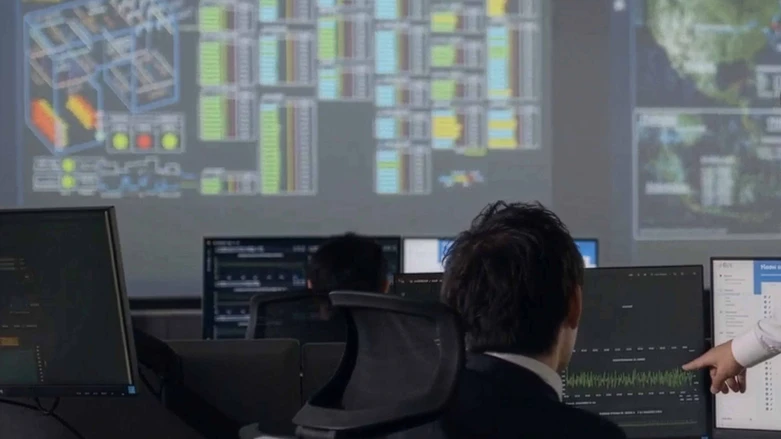
Remote monitoring and expert analysis to support earlier investigation of equipment condition changes
JERA's Remote Monitoring Service uses machine-learning models to detect deviations from expected operating values across main and auxiliary equipment at power plants. Data analysts review each deviation — with plant equipment specialists where needed — and report findings, trends, and recommended checks. Backed by over 70 years of thermal power experience, RMS enables earlier investigation and better-informed maintenance planning.

Issue
-

Forced outages and revenue loss
-

Rising maintenance costs caused by developing equipment issues
-

Difficulty maintaining and transferring technical expertise
AT A GLANCE
70+ years
Operating thermal power plants worldwide
WHY JERA
Seven decades of thermal power expertise
As one of the world's largest power generators, JERA brings 70+ years of thermal power operation to remote monitoring. That hard-won experience — including our own fleet's trouble records and the countermeasures built from them — underpins the technical depth behind every diagnosis.
-
~200
validated detections per year
Based on the annual average across JERA's own fleet, FY2021–FY2025
-
9 Units
Supported for external customers
RMS is deployed on equipment outside JERA's fleet.
-
10 %
Reduction in forced outages
Based on applications within JERA's own fleet
-
94 %
customer satisfaction
Based on an FY2025 survey of external RMS customers
OVERVIEW
What is Remote Monitoring Service
Remote Monitoring Service (RMS) analyzes plant operating data to identify early signs of equipment condition changes. Analytical models generate early-warning alerts by comparing expected and actual operating values. Data analysts review detected alerts and assess whether further investigation may be required. When reporting is considered necessary, findings, trend information and recommended checks are provided, with technical input from equipment specialists where appropriate. The monitoring scope can cover both main and auxiliary equipment, depending on data availability and the scope agreed with the customer.
BENEFITS
What early detection delivers
-
01
Minimizing forced outages and lost generation opportunities
By identifying equipment anomalies early and enabling planned action before a condition develops into a major failure, RMS helps reduce unplanned shutdowns and associated lost generation opportunities.
-
02
Reduced risk of extensive and urgent repairs
By identifying equipment anomalies early, RMS helps prevent further damage and enables planned inspections and repairs. This can help avoid an expanded repair scope and costly emergency work, contributing to lower maintenance costs.
-
03
Plant operation support through technical expertise
JERA's data analysts and equipment specialists apply accumulated operating experience and equipment knowledge to provide relevant findings and recommended checks, supporting customers in managing their equipment.
CASE STUDY
Early detection of a low-pressure feedwater heater tube leak
CHALLENGE
Unusual changes were developing in the operating data of a low-pressure feedwater heater, but no conventional alarm had been triggered, making it difficult for plant operators to recognize the abnormal condition. Because these changes could indicate a developing equipment issue, failure to identify and address the condition at an early stage could allow it to progress, potentially resulting in further equipment damage, a wider repair scope and lost generation opportunities.
SOLUTION
The anomaly-detection system identified increasing trends in both the low-pressure feedwater heater drain-tank level-control valve position and the drain-pump current. Based on an analysis of the related operating data, the data analysts identified a potential tube leak in the low-pressure feedwater heater and recommended that the plant check for unusual noise around the heater, discrepancies between the redundant level measurements, and the operation of the control valve. Following an on-site inspection based on these recommendations, the plant determined that a tube leak in the low-pressure feedwater heater was likely. The plant then arranged the necessary repair materials and scheduled the required work for the next planned outage. During the outage, the tube leak was confirmed, and the affected tube was plugged.
RESULT
Early detection gave the plant time to investigate the suspected tube leak and prepare the necessary repair materials before the planned outage. This enabled the affected tube to be inspected and repaired during the scheduled outage, reducing the risk of further equipment damage, a wider repair scope and prolonged output restrictions.
Source: A 1,000 MW coal-fired unit within JERA's own fleet. Results may vary depending on plant configuration and operating conditions.
Q&A
Remote Monitoring Service, answered
Q. What data is required to use RMS?


RMS requires historical operating data at one-minute intervals, as well as current operating data continuously provided online at one-minute intervals. At least one year of historical data is recommended to develop anomaly-detection models that reflect a range of normal operating conditions. Where less historical data is available, including at a newly commissioned plant, the feasibility and implementation approach will be assessed based on the available data.
Q. Can we adjust the predictive diagnostics model at our site?
The predictive diagnostics model is managed by JERA, so customers are not able to adjust the model themselves.
Q. Can we view the predictive diagnostics dashboard at our site?
JERA does not pass detection results directly to customers; instead, we share findings that have been reviewed by our in-house engineers. To avoid any miscommunication, the predictive diagnostics dashboard itself is not shared with customers.
Q. How is operating data transferred to RMS?
The data-transfer method is determined in consultation with the customer based on the plant's existing systems, available interfaces and security requirements. RMS can accommodate appropriate data-transfer methods agreed for each plant.
Q. How is the security of plant data protected?
The security of data transferred to RMS is ensured through measures designed to protect both the plant and the transferred data. Protection of the plant Firewalls are implemented at the connection between the plant and the data integration system. The connection is configured to permit data transmission only from the plant to the external environment and to prevent inbound communication to the plant. Specific security measures are designed and implemented in accordance with the customer's security policies. Protection of transferred data Data is transferred using encrypted communication methods and securely managed in a connected cloud environment. Access to the data is restricted to authorized personnel who have been granted appropriate access rights.
EXPLORE MORE
Related O&M Services


See what RMS would catch at your plant
Request a consultation. JERA will review your current condition monitoring setup and show how RMS fits into your broader asset performance management strategy — before you commit.
NOTES
Author: JERA Overseas Engineering Service Group · Reviewed by O&M Engineering Strategy Division Published Sep 2026 · Last updated Sep 2026