


Preservation Advisory Service
Maintaining long-term equipment reliability through effective preservation practices
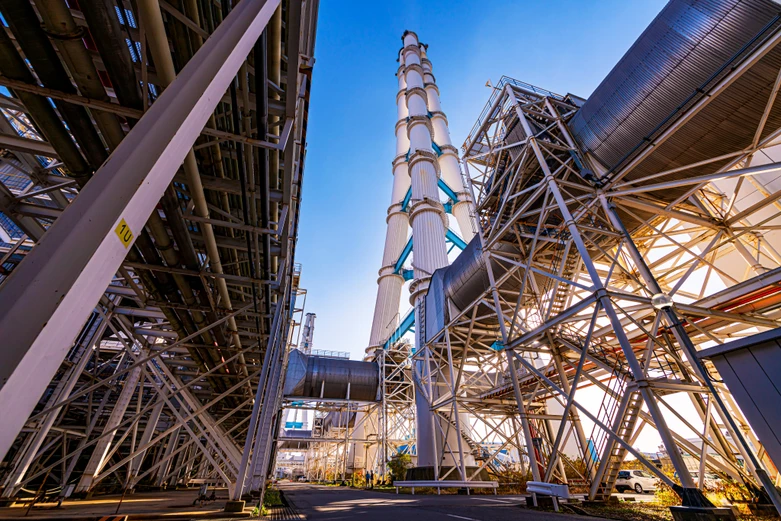
Mothballing and preservation that keep idle plants restart-ready
JERA's Preservation Advisory Service covers mothballing and asset preservation of idled thermal assets, keeping them sound and restart-ready through long-term shutdowns. The result: corrosion protection against degradation, lower restart costs, and preserved supply optionality.

Issue
-

More thermal units facing long shutdowns
-

Uncertainty in preservation planning
-

Degradation and restart cost
AT A GLANCE
70+ years
Operating thermal power plants worldwide
WHY JERA
We've restarted idle plants ourselves
JERA restarted an oil-fired plant idle for four years and worked through the boiler and turbine issues first-hand — a user's view an OEM can't offer.
OVERVIEW
What is Preservation Advisory Service
Preservation Advisory Service provides technical support for equipment preservation during long-term shutdowns. Drawing on decades of running its own fleet, JERA shares concrete, user-perspective mothballing and asset preservation methods — including corrosion protection for idle piping — to maintain equipment soundness without unnecessary cost. JERA tailors the method to each system — boiler preservation, flue gas duct preservation, turbine preservation, generator preservation, and I&C equipment preservation.
BENEFITS
What proper preservation delivers
-
01
Ready for long lay-up
Preservation designed to hold through extended shutdowns, system by system.
-
02
A plan you can act on
Methods and procedures shaped to your plant, drawn from JERA's own operating experience.
-
03
Sound equipment at restart
Corrosion protection prevents deterioration and reduces restart repair work.
CASE STUDY
Keeping insulation material dry with boiler dry-firing
CHALLENGE
Restarting an oil-fired plant idle for four years surfaced many boiler and steam-turbine problems. During long shutdowns, rainwater seeps into the gap between flue-gas duct and insulation, and the resulting moisture drives corrosion — inflating restart repair costs.
SOLUTION
Beyond standard nitrogen filling and chemical flooding, JERA introduced a periodic boiler dry-firing routine to drive out that moisture. A prior trial confirmed the technical issues in the ignition and shutdown sequences and established a method that keeps fuel and electricity cost to a minimum.
RESULT
Equipment stays sound and restart-ready through long shutdowns, avoiding the corrosion and heavy restart repairs that idle plants otherwise incur.
-
4 years
Oil-fired plant idle before restart
Source: Based on JERA's own facilities in Japan. Approach varies by plant configuration.
Q&A
Preservation Advisory Service, answered
Q. What is Preservation Advisory Service?


It's technical support for preserving equipment while a plant is shut down for the long term, so it stays sound and restart-ready. Drawing on decades of operating its own fleet, JERA shares user-perspective mothballing and asset-preservation methods that prevent corrosion and degradation while keeping cost to a minimum.
Q. Can you support turbines, generators, electrical, and I&C — not just boilers?
Yes. Share your equipment's operation data and current condition, and JERA will propose the specific scope and content of technical support across turbines, generators, electrical, and I&C equipment — not only boilers.
Q. Why is JERA's user perspective a strength?
JERA has actually operated and maintained this equipment — experience an OEM that only supplies equipment cannot offer. Our strength is not just anticipating the technical issues that can arise during long-term preservation, but having lived through them ourselves.
EXPLORE MORE
Related O&M Services

Keep your idle plant ready to run
Request a consultation. Share your operation data and equipment status, and JERA will propose a preservation plan that keeps your plant sound and restart-ready at minimal cost — before you commit.
NOTES
Author: JERA Overseas Engineering Service Group · Reviewed by O&M Engineering Strategy Division Published Sep 2026 · Last updated Sep 2026